Meguro Parasitological Museum, Tokyo
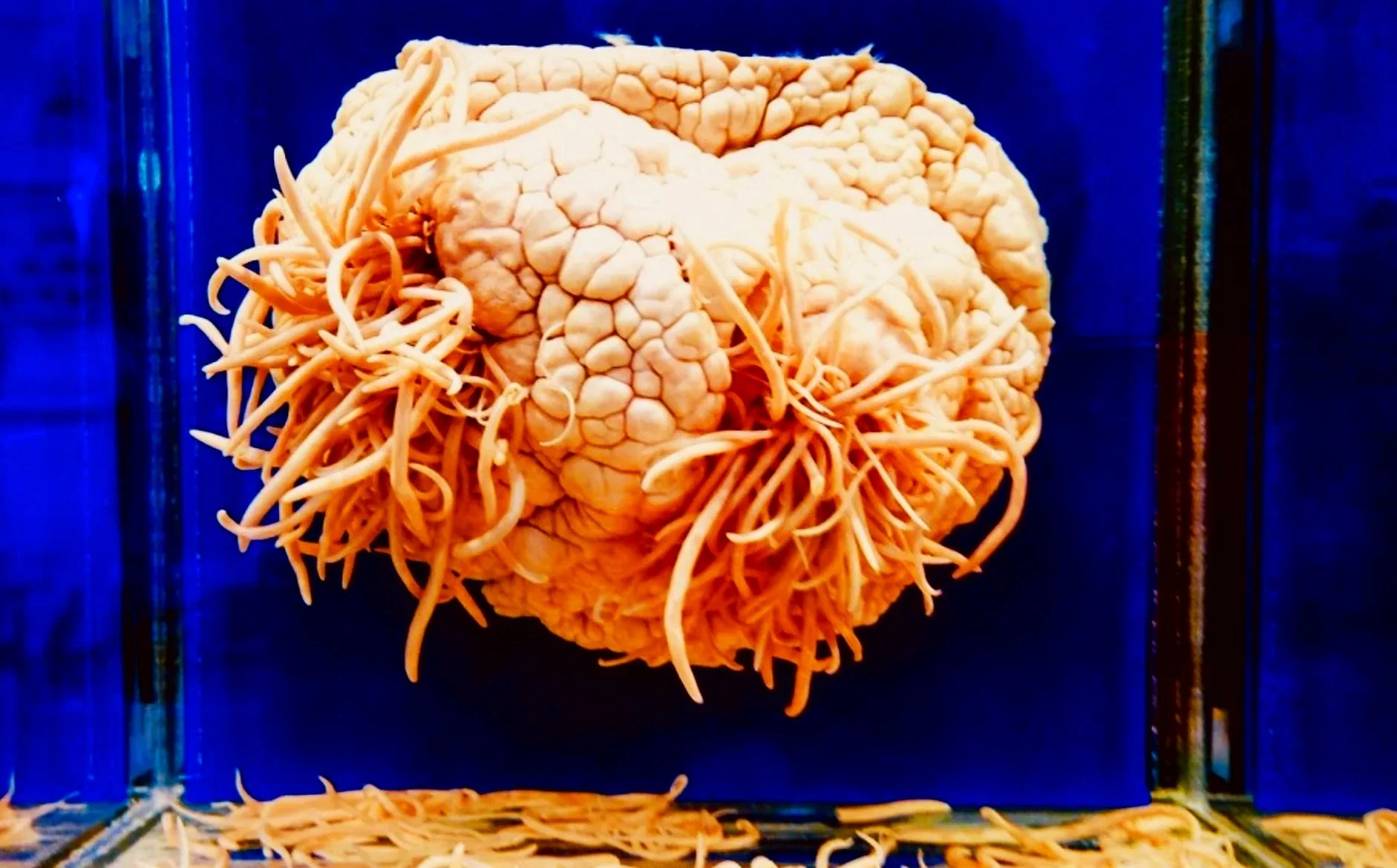
A brain infested with worms at the Megaru Parasitological Museum, Tokyo
Parasitism: Nature’s Success Story
Just off the JR Yamanote line circling the bustling city centre of Tokyo sits a museum like no other. In a city renowned for its raw fish delicacies, this museum is perhaps the world's only institution dedicated solely to the mysterious world of parasites. Founded in 1953 by parasitologist Dr Satoru Kamegai, who wanted to share his passion for these widely unloved creatures, the collection now features over 300 preserved specimens. Visitors can marvel at glass jars filled with parasites of all kinds, and if you’re lucky, you can watch them emerging from their host's organs as an added bonus. But before deciding on lunch, be sure to see the 8.8-meter-long tapeworm extracted from a human digestive tract, thought to have hitched a ride after its host savoured a particularly enjoyable sushi meal.
The Megaru Parasitological Museum is not just a showcase for these fascinating creatures; it is also an active research facility and educational centre which focuses on the mysterious world of parasites. Biology textbooks teach us that parasites are grouped into three distinct categories: Protozoa, which are the single-celled organisms, such as one of the world's deadliest killers known to man: Plasmodium, the cause of malaria; Helminths, which are the worms and flukes of our nightmares; and lastly, Ectoparasites, the itch-inducing surface-living dwellers such as scabies, mites, and head lice. But parasites are much more than these categories would lead us to believe. Parasitism is actually an evolutionarily successful strategy used by about 40% of all living species on Earth. A parasite is defined as any organism that lives in or on a host, steals its nutrients, and causes harm without immediately killing it. This broad definition actually includes thousands of plants, fungi, and animals not covered by the groups above, but instead embraces all those species that use this highly successful strategy to survive, thrive, and multiply, whether their host wants them to or not!

Giant tape worm at the Megaru Parasitological Museum, Tokyo
The Wild World of Parasites
What are some of nature's most notable parasites? Perhaphs its the biggest one, the Placentanema gigantisma, a roundworm that lives exclusively inside the placentas of sperm whales and can grow up to 24 feet long. Or perhaphs its the zombie creating parasite from our nightmares, the Ophiocordyceps fungus, which hijacks the central nervous system of jungle ants, sprouting hyphae from their bodies and forcing them to climb to the perfect vantage point to die and launch fungal spores into the unsuspecting ants below. Or maybe it’s the cleverest one, the microscopic barnacle named Sacculina. This particular parasite infiltrates both male and female crabs, taking over their hormonal systems to sterilise them and chemically alter the infected males, changing them into female crabs, and forcing them to raise the parasitic larvae as their own offspring, nurturing and protecting the barnacle spores until they hatch.
However, the weird and wonderful world of parasites isn't entirely malevolent. While most parasites have evolved to drain their hosts slowly for their own gain, there are certain parasitic worms that have evolved more of a symbiotic relationship with their human hosts. Medical researchers believe these specific worms act by calming the immune system and may offer treatment for autoimmune diseases, chronic inflammatory conditions, and allergies in the future, though not sure how many people will want a prescription for a tapeworm!
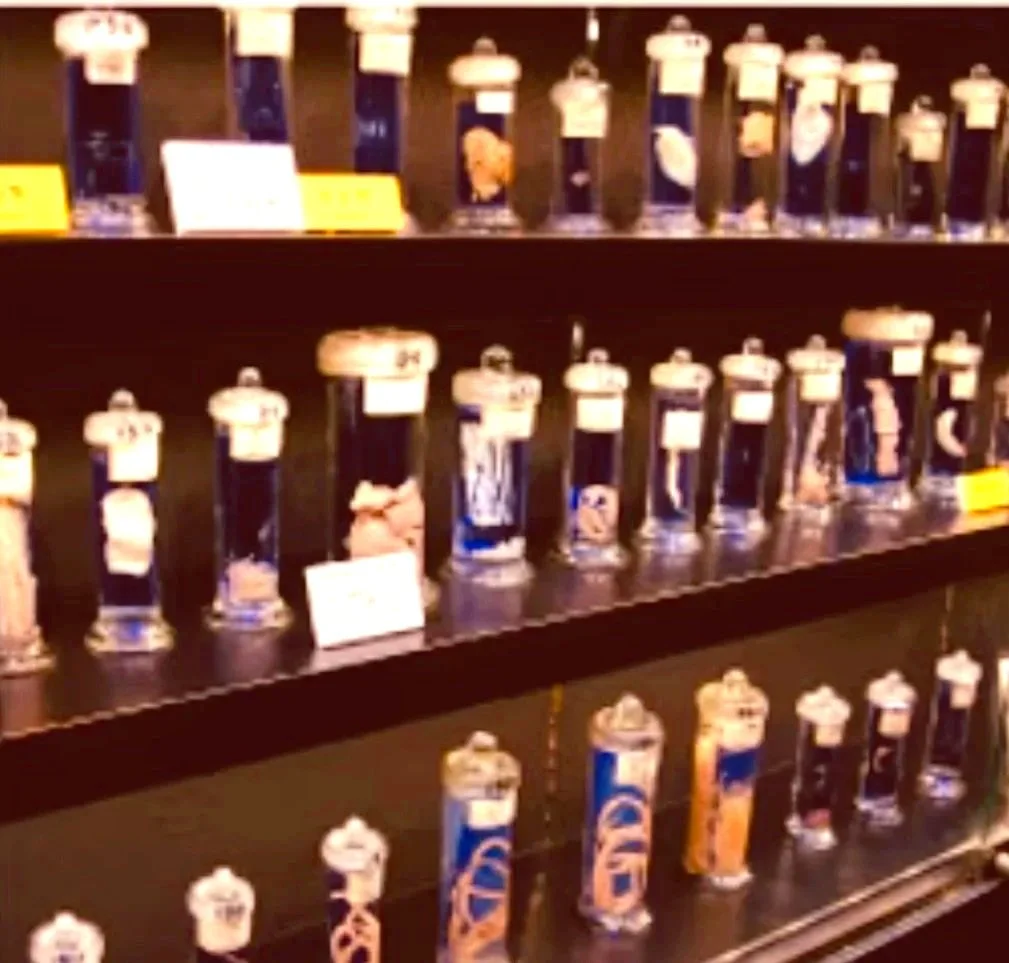
Various parasites on display at the Megaru Parasitological Museum, Tokyo
Top Tips
Getting There: The closest station is Meguro Station, which is on the JR Yamanote Line. Exit from the west exit, and the museum is about a 15-minute walk from there.
Opening Hours: 10am -5pm daily, but closed on Mondays and Tuesdays. Check the website before going to ensure it is open, as it closes occasionally for public holidays. https://www.kiseichu.org/e-top.
Admission Fee: Free, but donations are welcome. There is a museum shop located on the second floor that sells an English guidebook, helpful for learning about the various exhibits on display in the museum. They also sell some lovely parasite-themed souvenirs to remember your visit by! And thankfully, there is no cafe on site.