Okunoin Cemetery, Mount Koya, Japan
Okunoin Cemetery
Japan’s Oldest Cemetery
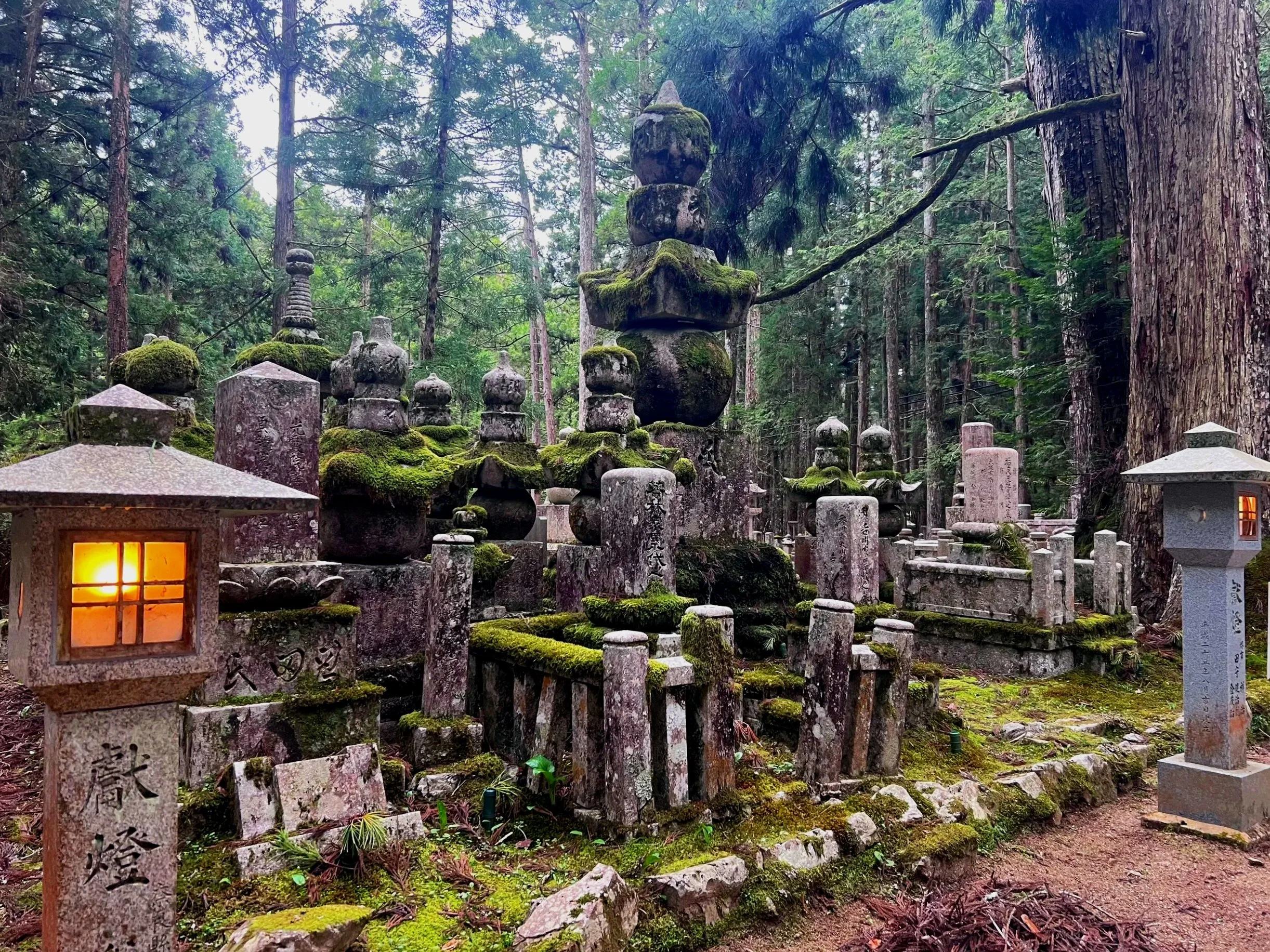
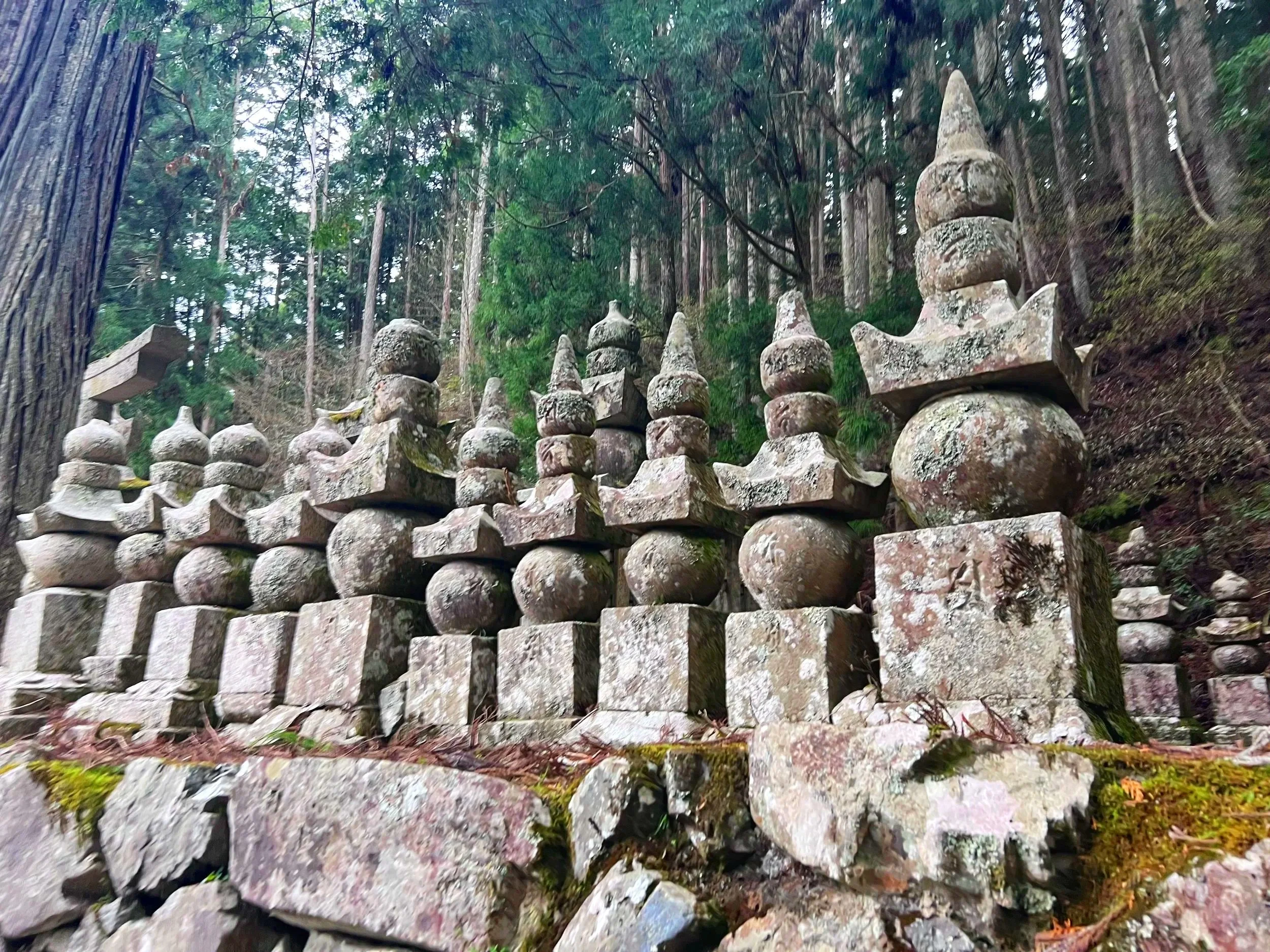
Perched atop the sacred Mount Koya, lying within a forest of century-old cedar trees and illuminated by a pathway lit by hundreds of softly glowing lanterns stretching for over two kilometres, is Okunoin cemetery, regarded as Japan’s oldest and most sacred cemetery. With more than 200,000 moss-covered graves and monuments, it is also considered Japan’s largest, but Okunoin is much more than just a burial site. This UNESCO Heritage site is also the final resting place of Kobo Daishi, the revered founder of Shingon Buddhism, and one of the founders of traditional Japanese culture. Though he rests in his mausoleum, he is not dead, but instead, thought to be lying in a state of eternal meditation where he has remained since entering the sacred site in the year 835. Forever praying for the peace and salvation of all souls until the future Buddha, Maitreya, returns to Earth. Pilgrims come from all over to pray, and monks continue to bring offerings of food to his mausoleum twice daily, as they have done for centuries, and will likely continue for centuries to come.
To visit Kobo Daishi, one must cross the Gobyobashi Bridge into the inner sanctum of the cemetery. This is the most sacred of sites where voices are kept to a whisper, no food or photography is allowed, and visitors ceremoniously wash the feet of the nearby Buddhas as a symbol of cleansing before bowing and finally crossing the bridge to the holy site. Once within the inner sanctum, the lights from Torodo Hall light up the night from the thousands of glowing lanterns filling the ceiling and shelves of the Hall, each one holding the soul of a departed, two particular ones that are said to have burned for over a thousand years without ever losing their light.
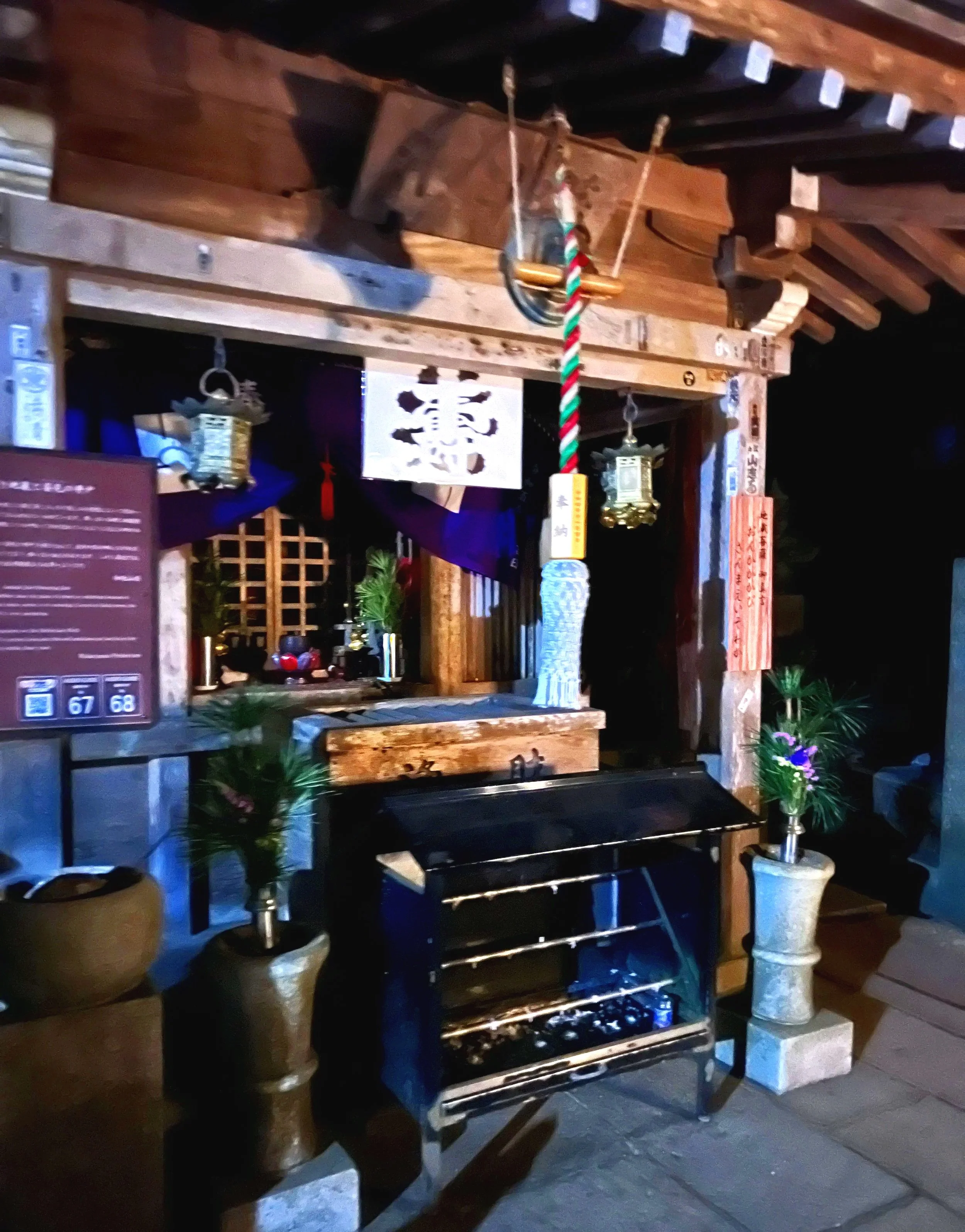
You can also learn quite a bit about yourself by taking a walk through Okunoin and visiting its multiple shrines scattered throughout the cemetery. Test your righteousness at the Miroku Stone that lies within a caged shrine where visitors are invited to lift it one-handed through a narrow opening. The weight of the Miroku stone is exactly proportional to the sins of the lifter, so be sure to use your strong arm! Or you may want to test your own mortality by peering into the still waters of the Sugatami-no-Ido, or the “Mirror Well,” to look for your reflection, but be warned, those who cannot see themselves in its surface are fated to die within the next three years. Trip on the steps along the path of the cemetery and suffer the same fate. And lastly, test your luck at the Asekaki Jizo, the “Sweating Jizo.” This statue is said to absorb the suffering of others. Its mysterious perspiration shifts from white to black depending on fate. White sweat, and you're in luck, but wipe away black sweat from the statue, and you are doomed to suffer a terrible fate.
Sugatami-no-Ido at Okunoin cemetery
Termites, Rest In Peace
Okunoin cemetery isn't just for pilgrims and monks in meditation. This sacred cemetery also holds thousands of graves and monuments representing the dead, from feudal lords to termites. Though 1200 years old, it is still an active cemetery to this day, open to anyone, regardless of religion, background, nationality, or even species. To be buried here, one’s beliefs just need to align with the teachings of Kobo Daishi. However, cremation is mandatory, though you do not need to be buried in full; a lock of hair or a few ashes is sufficient to establish a connection to Kobo Daishi and this sacred site.
Though the majority of the cemetery seems to be endless lanterns and moss-covered stone graves, there is also the newer section that holds a number of monuments of interest. One of the most famous of these monuments has the simple phrase engraved in the stone, reading “Termites, rest in peace.” This monument was commissioned by a Japanese pest control company that was undoubtedly responsible for the untimely death of many a termite, but in a culture where all living things are sacred, they are remembered and honoured for their role.
Another monument that seems strangely out of place, nestled in the centuries-old trees, is a reproduction of the Apollo 11 rocket. Known as the “Apollo Tower,” it was erected by a Japanese aircraft company to honour employees and victims of wartime air raids. While nearby monuments commissioned by Asahi, Kirin and Pachinko parlours, as well as numerous other corporations, stand to honour their employees who have passed on to the other side. These unusual graves help to make Okunoin one of the most interesting, but also one of the most serene, and truly beautiful cemeteries in the country, if not the world. Rest in peace, termites.
Okunoin Cemetery, Koyasan
Top Tips
Getting There: Okunoin Cemetery is located at the top of Mount Koya in Wakayama Prefecture. It is accessible by car in just under two hours from Osaka, or as part of a day tour by bus from retailers like GetYourGuide, with departures from Osaka. Koyasan can also be accessed easily on your own via public transportation if you have the time, taking approximately 2.5 hours from Osaka Namba station on the Nankai limited express to Gokurabashi station. From there, a short cable car takes you to the bus depot at the top of the mountain. Walking from the depot is not permitted on the road, but the buses are frequent and take you directly into the centre of Koyasan in about 10 minutes.
Staying Overnight: Most people who stay overnight opt to stay at a Shukubo, which is a Buddhist temple that offers sleeping arrangements as well as a traditional vegetarian dinner and breakfast prepared by the monks. Accommodations range in price, though all tend to be on the higher side, and consist generally of private rooms with tatami and futons for beds. Some have on-site onsens as well to enjoy. If staying overnight, the Koyasan Heritage 2-day pass is a bargain as it includes round-trip train tickets from Osaka as well as the cable car and unlimited bus journeys in Koyasan. It can be purchased at Namba or Shin-Imamiya station in Osaka, or online at https://www.nankai.co.jp/en_railway/ticket/koyasan.
Things to do: With over 117 temples, various museums, gardens, and the Okunoin cemetery, there is plenty to do in this small village. There are also multiple hiking trails, one in particular called the Women’s Pilgrimage Route, which circles the town and is a serene experience; just watch out for bears! One particular enjoyable tour that is highly recommended is the Okunoin night tour with a local monk in English. Book in advance as it often sells out. It can be booked here https://awesometours.rezio.shop/en-US/product/TFLKTO.