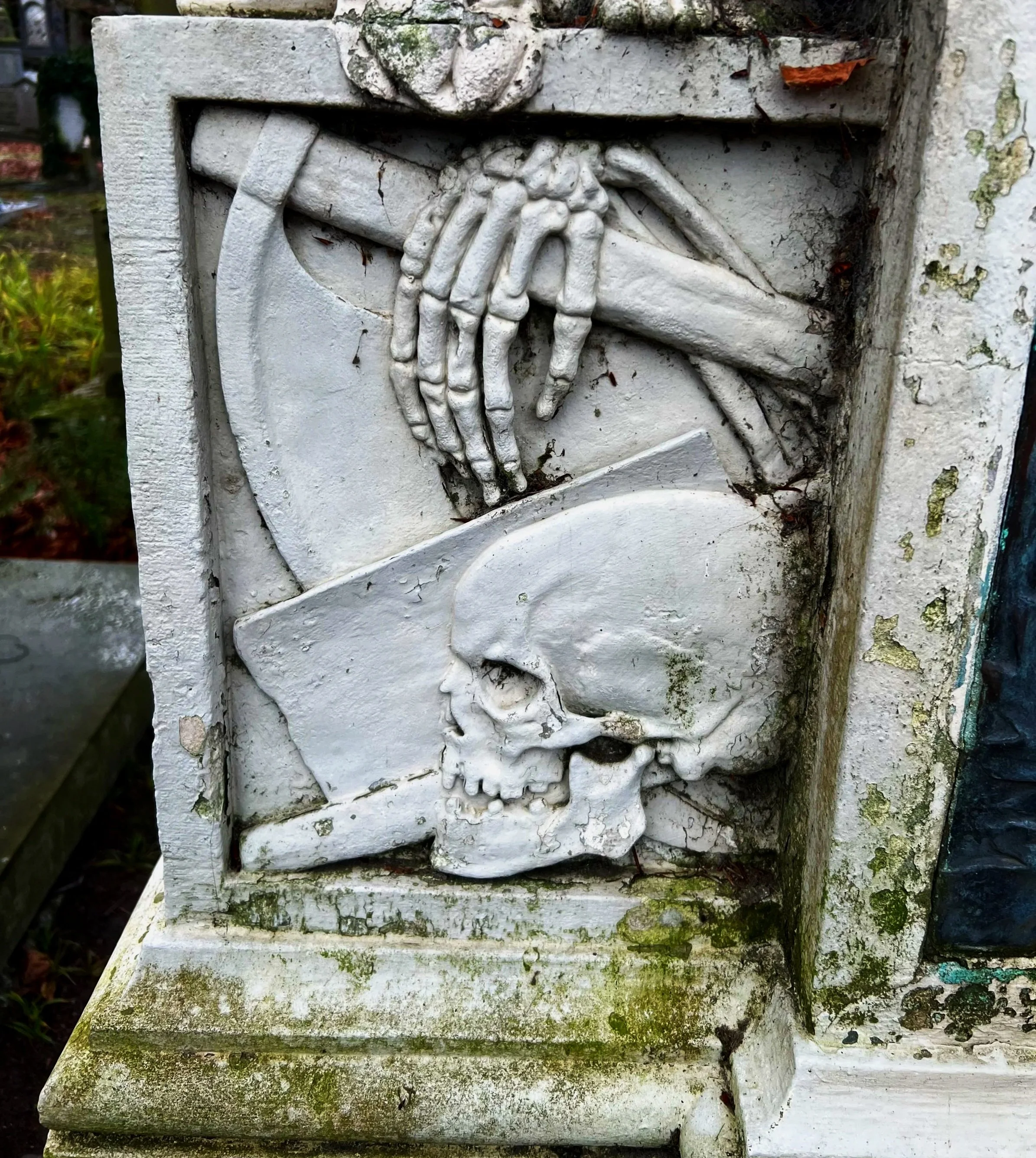
Memento mori at Bruges’ Cemetery of the Skull
The Cemetery of the Skull
Bruges Central Cemetery, also known as The Cemetery of the Skull, got its name from a particularly striking tomb belonging to the textile merchant named Antonius Wemaer. After his death in 1837, he was buried in the cemetery under a moss-covered tombstone depicting a skull and crossbones resting on a pillow carved of stone. Gravediggers called him Pirate Piet, and rumours began to spread of his pirate past, though more likely stemming from his pirate-esque gravestone than actual fact Aside from Pirate Piet, The Central Cemetery of Bruges is also famous for being the oldest active cemetery in the whole of Belgium, with its first burial in the year 1787, and from then on, interring all the newly deceased of Bruges who were laid to rest in its grounds, just beyond the city walls.
Similar to Belgium's neighbouring countries at the time, cemeteries were being moved from the cities' churchyards to the outskirts as the ever-expanding urban population was leading to too many people in the city, both alive and dead. The overcrowded churchyards in heavily populated areas were bursting at the seams, with decomposing bodies leaching into the groundwater, contaminating the water supply and spreading disease, thus causing even more bodies to deal with.
The ruler of Belgium during this time was the Emperor Joseph II of the Habsburg Empire. He fancied himself a forward-thinking ruler and thus ordered changes to be made in all his lands regarding the burial practices of his subjects. He decreed that the cemeteries were to be moved to the outskirts, where citizens would be buried in unmarked mass graves. He even went on to the forced introduction of the reusable trapdoor coffin, making burials more economically friendly for all. The trapdoor coffin was designed with a trap door at its base, which, when opened above the grave, would dump the newly-departed directly into the open grave below, and thus free to be reused for the next unlucky person in need. This idea of unmarked mass graves and the reusable coffin both proved to be quite unpopular, and the coffin was revoked after just four months of use. However, his decree on banning the use of city churchyards for burials save for the high nobility stood firm, and thus Bruges Central Cemetery remained the burial site for all citizens of Bruges and is, in fact, still in use today.
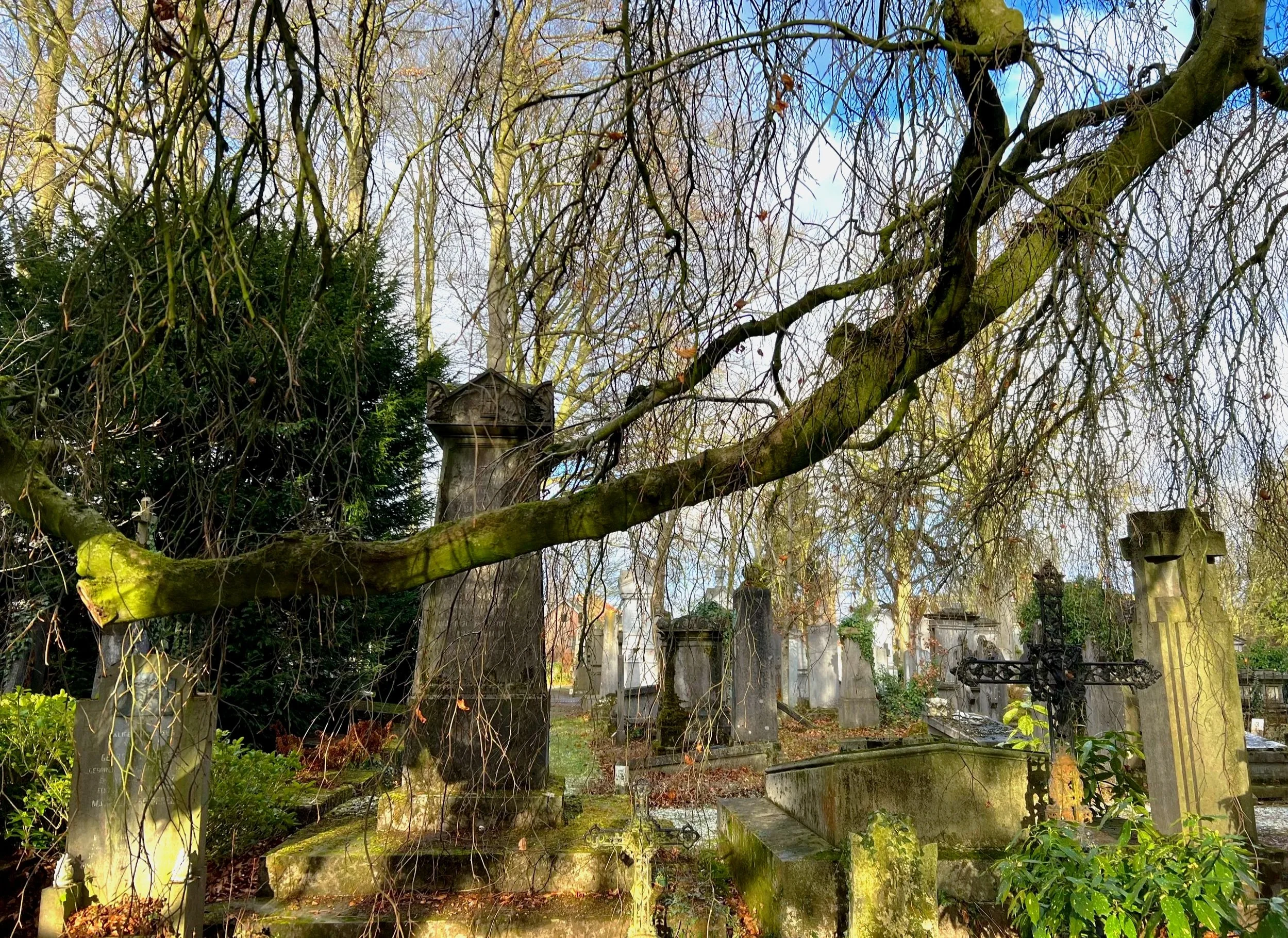
Bruges Central Cemetery
The Spanish Flu Pandemic
As the oldest cemetery in Belgium that has been in constant use since 1787, the Cemetery of the Skull holds thousands of dead, many from a time before modern medicine, a time when infectious diseases were the main culprit of an untimely death. And without vaccines and antibiotics, diseases such as tuberculosis, cholera, smallpox, and typhus took many before their time.
But one particular illness, which is still common today, brought on one of the deadliest pandemics in recorded human history. The illness was called the Spanish Flu, or the Flemish Flu by the Americans, and it was estimated to have killed between 50 and 100 million people between the years 1918 and 1920.
November 11th, 1918, Armistice Day, marks the end of WWI when soldiers began their long journey home from the front lines of Europe, bringing with them the deadly virus. The Spanish Flu spread rapidly from there, across the continents, following troop movements and railway lines, until it reached every corner of the globe.
Infectious diseases tend to be most detrimental at the extremes of age, the very youngest and the very oldest among us being the most at risk, but the Spanish Flu was different in that it affected the young adult population preferentially, with often deadly consequences. Why did it affect the young with such force? Likely, a multitude of factors were at play; firstly, the crowded barracks where the soldiers lived helped the virus to quickly spread. With their bodies weakened by years of war, malnutrition, and psychological stress, and having no natural immunity to the new strain of circulating flu virus, the young men became very unwell and often succumbed to the secondary bacterial infections that followed.
Also, treatments in the early 20th century for the ill were extremely limited, with no antivirals to fight the virus and no antibiotics for bacterial infections. Patients received mostly supportive measures such as aspirin, quinine, and arsenic while hoping for the best. Public health responses were slow to adapt as governments were not prepared, nor equipped for a pandemic of this size, but in the end, measures were introduced that might sound familiar to most of us today: face masks, quarantines, and social distancing. Eventually, the virus became less virulent, and the people became more resistant. Left to remember those who fell, many of whom are likely buried in the Bruges Central Cemetery.
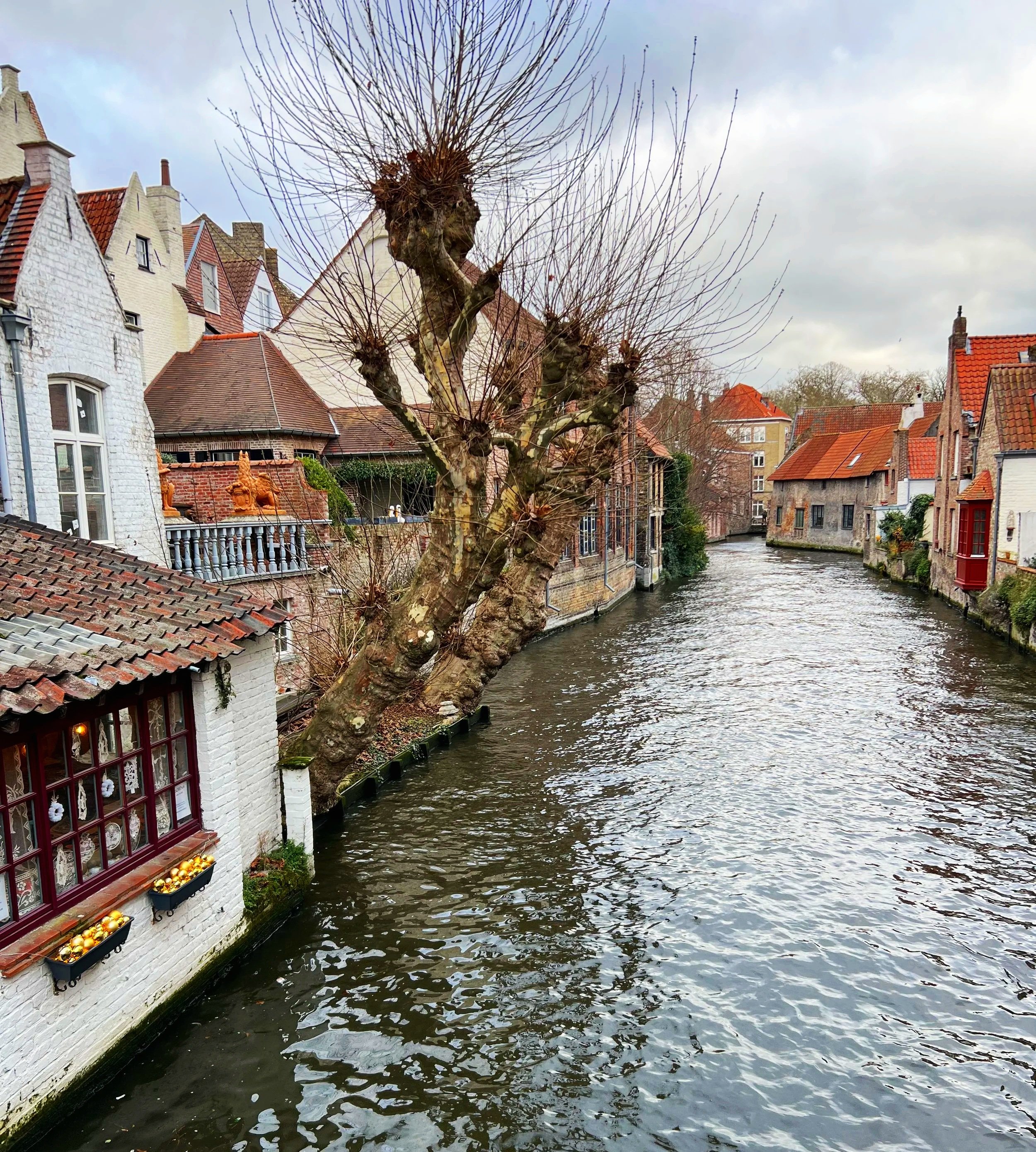
Bruges’ canals
Top Tips
The cemetery is 12 hectares in size, though the older, more interesting part is smaller and is located near the main entrance. Pirate Piet’s grave is in this area, straight ahead from the main gate. Expect to take 20 minutes to an hour at most to explore the cemetery, depending on how long you want to linger.
Address: Kleine Kerkhofstraat 62, 8000 Brugge
Opening Hours: Summer(Apr 1–Oct 15): 8:00 am - 6:00 pm, Winter(Oct 16–Mar 31): 8:00 am – 5:00 pm
Getting There: The cemetery is located just outside of the city centre, about a 20-30 minute walk from the Katelijnepoort Bridge. Alternatively, there are ample bicycles to rent from within the city in order to get to the cemetery via the many bicycle lanes throughout Bruges. If driving, street parking seemed readily available in this part of the city and was free of charge.
Facilities: There are free toilets at the entrance if needed.