Fungus Rock, The Island of Gozo, Malta
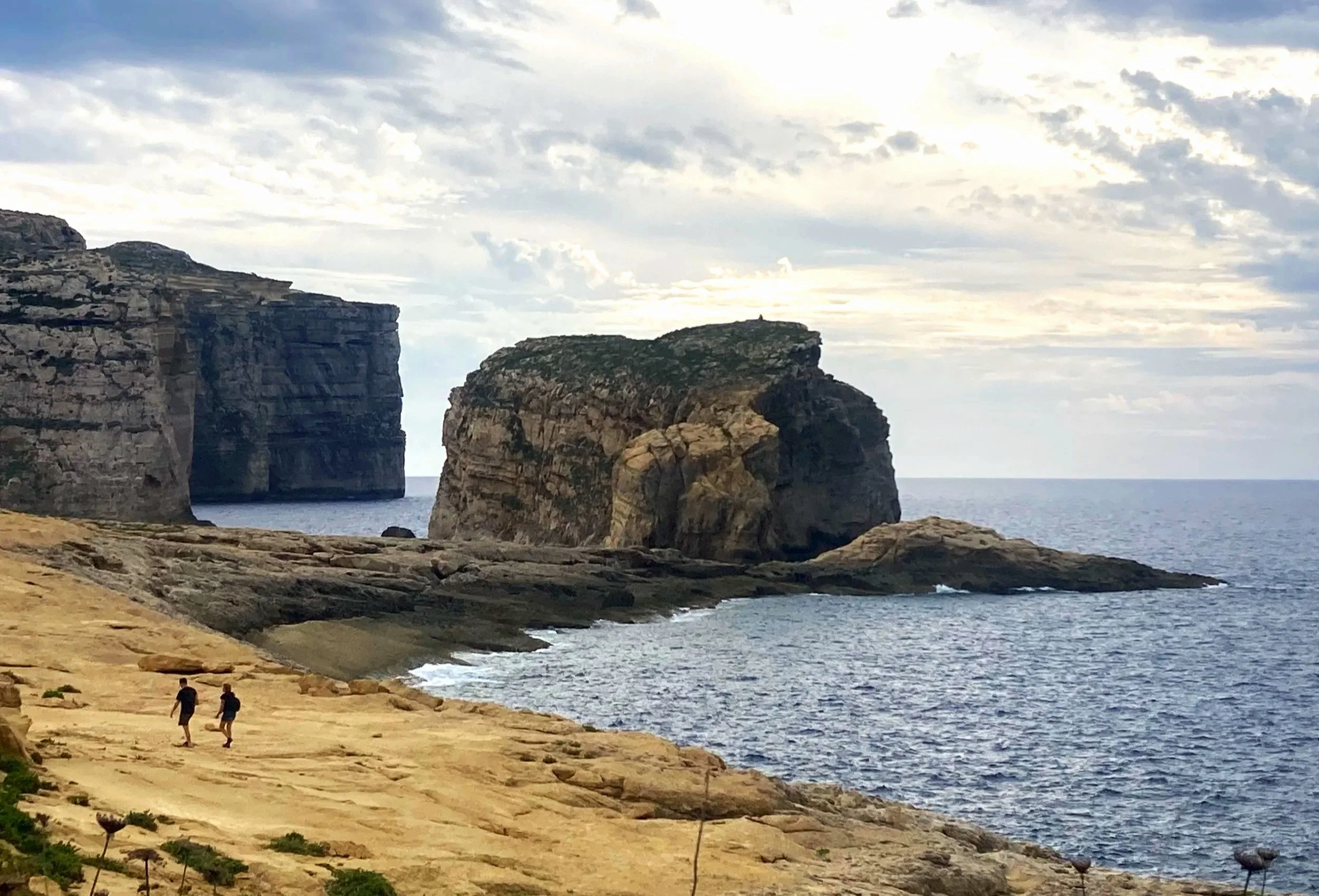
Fungus Rock, Dwejra, Gozo
The Knights of St John: Medical Missionaries of Old
Lying in the Mediterranean Sea, just to the south of Sicily, is the tiny European island nation of Malta. Though small in size, it has an extraordinary history going back to a time before the pyramids, as seen in its megalithic temples still standing today. The islands have been home to many an invader, from the Phoenicians to the Romans, to the French, and then the British, until becoming the independent nation that it is today. Within this long list of rulers who made Malta their home were the Knights of St John, also known as the Knights Hospitaller. Having been gifted the islands by the Holy Roman Emperor Charles V after being driven out of Rhodes by the Ottomans, the Knights were given the land in exchange for a yearly rent of a single Maltese Falcon. The Knights were a Catholic military order hailing from Jerusalem that was founded in the 12th century during the time of the Crusades. The Order’s mission stemmed from helping the Christian Pilgrims in the Holy Land, providing care for the sick and wounded, and also defending those pilgrims, the Church and the Christian faith from attack.
From 1530 until being driven out of Malta by Napoleon in 1798, the Knights transformed the islands over their two centuries of rule, building the fortified cities still standing today, and establishing a strong naval base to defend Christian Europe from the advancing Ottoman Empire. Throughout this time, the Knights continued their mission, treating the ill and infirm by building hospitals and providing healthcare to the Maltese people, and also forming the School of Anatomy and Surgery, which is still training doctors to this day.
Although conquered by the French, the Knights remained an active order and are known today as The Sovereign Military Hospitaller Order of St John of Jerusalem, of Rhodes, and of Malta. Though they no longer have land, the Knights are recognised as a sovereign entity and hold a permanent observer status at the United Nations. They have their own passports, coins, and stamps, and administer a network of embassies across the globe in countries that recognise their sovereignty. Their headquarters are now located in Rome, where they have extraterritorial status, thus immune to the laws in which their headquarters stands.
And like medieval times, they are still led by a Grand Master, though their members are no longer limited to noble European families. The Order currently has more than 13,500 Knights, Dames, and Chaplains, along with tens of thousands of medical professionals and volunteers within their ranks. And with no borders to defend, their work today focuses on humanitarian crises rather than battles, aiding the ill and wounded and those in need across the globe, continuing their work as the world’s oldest humanitarian medical mission.
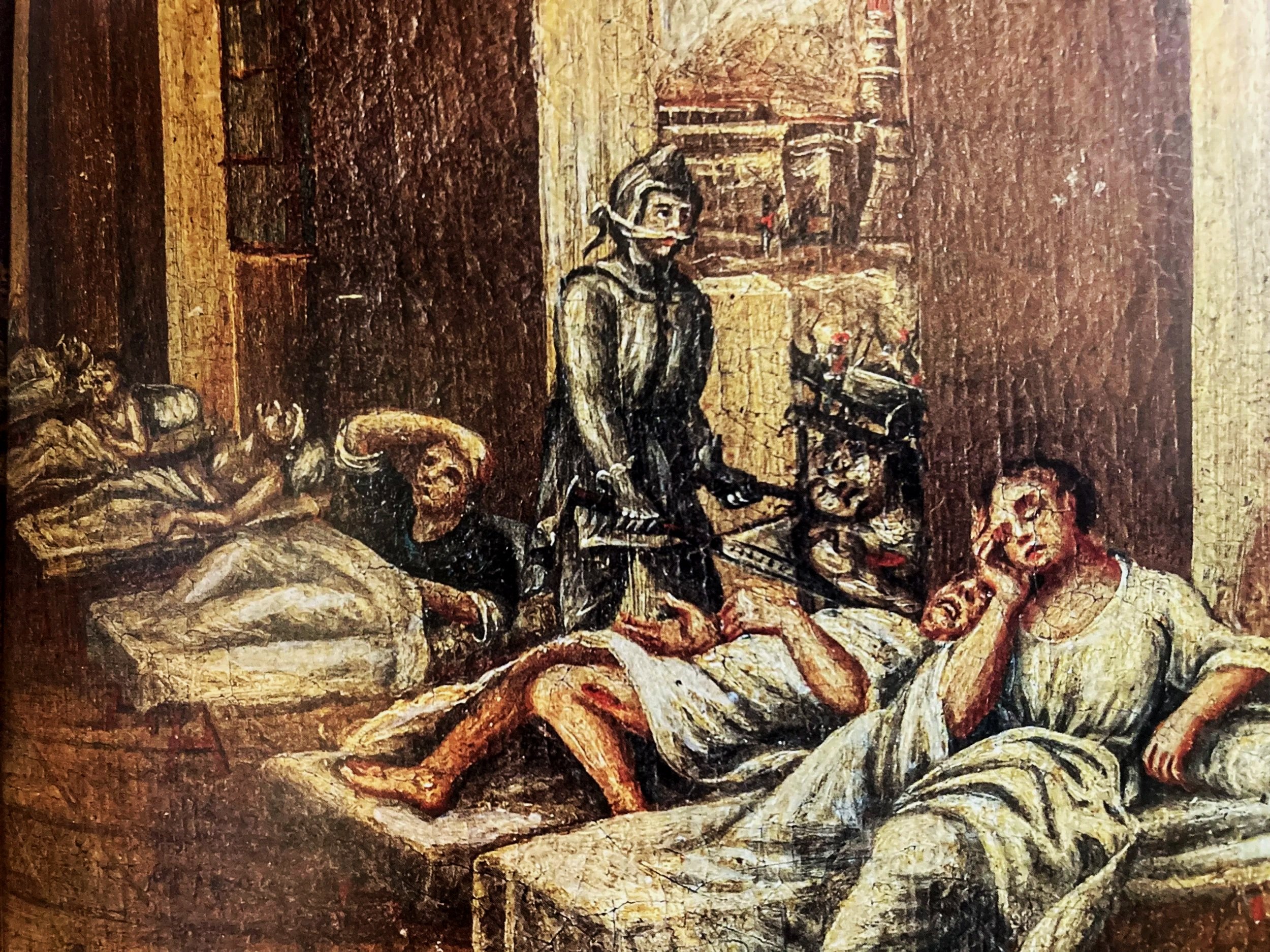
A painting depicting the Pest Hospital in Valletta by Anna Lungaro
Fungus Rock and the Art of Healing
Off the coast of Gozo, located in the north of the Maltese archipelago, lies an even smaller island aptly named Fungus Rock. The Maltese call it Il-Ġebla tal-Ġeneral, the General’s Rock, but its history belongs less to generals and more to the physicians and apothecaries who treasured a particular plant that grew on this isolated rock in the Mediterranean Sea.
The plant named ‘Maltese Fungus’ is not actually a fungus at all, but is instead a parasitic flowering plant known as Fucus coccineus melitensis. This particular plant thrives in the coastal southern Mediterranean areas by attaching to a host plant’s roots in order to sprout its dark red club-like stems once a year from the salty soil. It's not a particularly pretty flower, nor does it smell nice, but for centuries, this plant was highly prized for its medicinal properties. Its shape is distinctly phallic-looking, leading early physicians to use it for all kinds of sexual dysfunction, from erectile dysfunction to treating sexually transmitted infections.
And it wasn't just used by the apothecaries for bedroom woes; the Crusaders also used to carry this plant with them to dress their wounds and treat dysentery acquired during their Holy Land crusades. By the 16th century, this strange plant from Malta had become so coveted that the Knights turned Fungus Rock into a fortress, only reachable by a highly guarded cable car. Unauthorized access to the small island incurred a heavy toll, often with one's life. Today, the rock remains similarly out of bounds, now a designated nature reserve, the small island is off-limits to the public.
Though no longer used to treat erectile dysfunction and dysentery, new research has shown the plant to have antioxidant, anticancer, anti-fungal, and anti-ageing properties. And proving the apothecaries of old correct, Maltese fungus seems to have potential benefits on fertility, and can even help your hair grow!
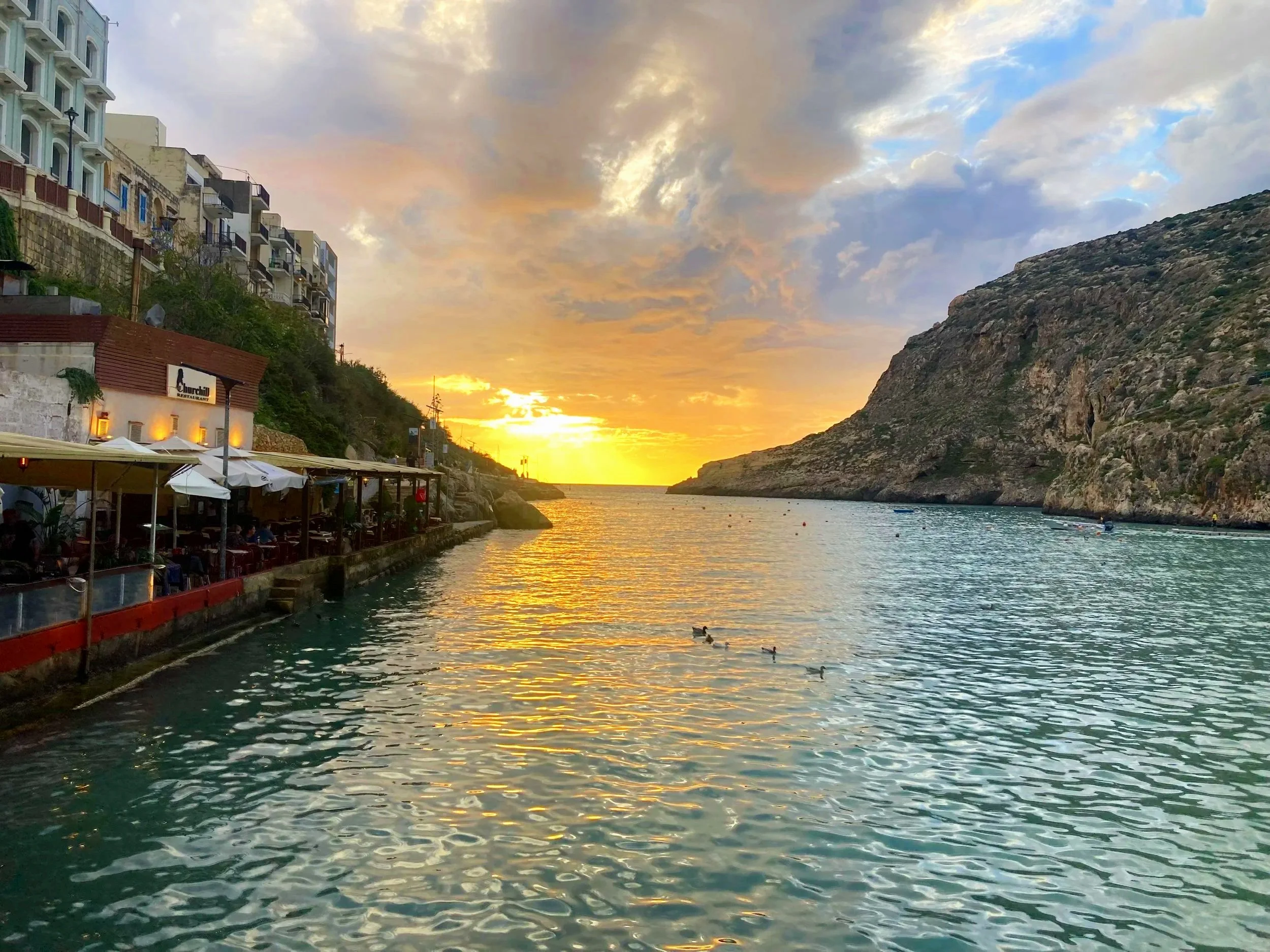
Sunset over Xlendi Bay, Gozo
Top Tips
Getting there: The island of Gozo can easily be reached by boat from Malta. There is a regular ferry service between the two islands, departing from the northern tip of Malta at Ċirkewwa and arriving in the town of Mgarr in Gozo. The journey takes about 25 minutes and is open to both foot passengers and those in cars. There are multiple sailings throughout the day, and payment is made on the return journey to Malta before boarding the boat or online beforehand, though there is no need to prebook. Costs are 4.65 euros per person and 11.05 euros per car. See https://www.gozochannel.com/ for the schedule and tickets.
There is also a new high-speed service to Gozo departing from Valletta and arriving at Mgarr harbour, which takes approximately 45 minutes and costs 7.5 euros per adult each way with reduced fares for seniors,students and adults. See https://gozohighspeed.com/booking for schedule and tickets.
Getting around: Once you arrive in Gozo, there are a few options for getting around. Probably the easiest is to hire your own car. Getting around is easy once on the island, as there is generally less traffic, and Gozo is relatively small, making it possible to see all the sites in a day. If driving isn't an option, then there are also public buses, hop-on hop-off buses, quad bike rentals, and even segway tours and tuk tuk adventures to be had!
Top sites to see: The medieval fortified citadel in Rabat, the red sand beaches at Ramla Bay, the secluded lagoon between two cliffs at Wied il-Ghasri, the salt pans of Marsalforn, the little restaurants along the bay at Xlendi, the ancient temple of Giantia, and, of course, Fungus Rock and the inland sea at Dwejra.